
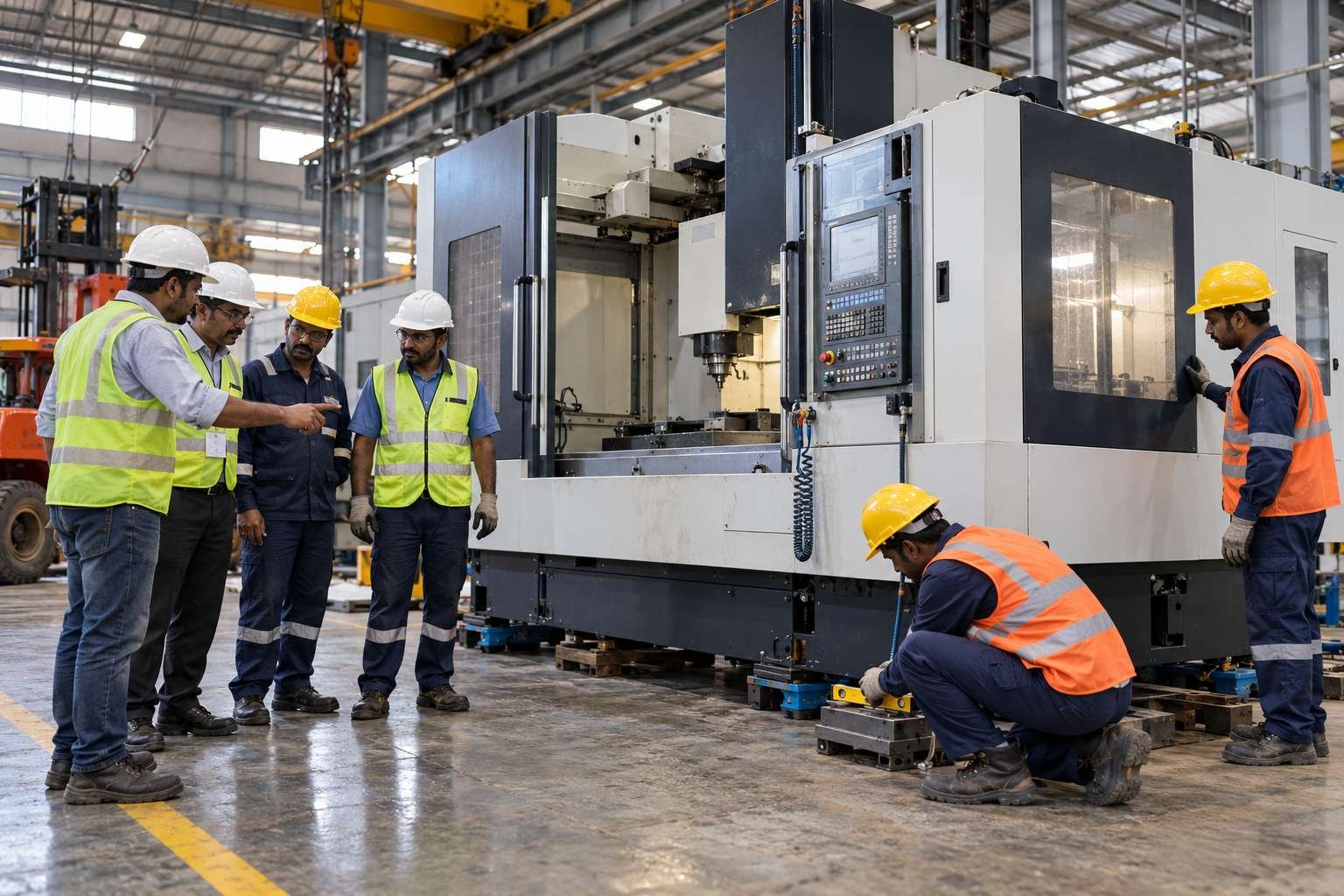
Plan around the actual requirement
This guide focuses on factory relocation equipment list. Its practical output is a requirement schedule linked to the assessed machine and site. Use it to organise the information and responsibilities for your particular project before dates, scope or equipment are confirmed.
The main planning decision
An equipment list is an outcome of assessment. Share machine data and access constraints before requesting a fixed crane or vehicle package; a fleet inventory by itself does not demonstrate suitability for the proposed move.
Context for this requirement
A factory relocation combines many assets and interdependent decisions. Inventory, destination layout, production priorities and specialist responsibilities need to be considered together. The receiving order may differ from the removal order, particularly when later machines need access through an area already occupied by an earlier delivery. Keep a shared asset register and distinguish preparation, movement and technical reinstatement. A coordinated plan gives each department a clear decision boundary and makes changes easier to trace.
Plan responsibilities alongside resources
Describe the work and its interfaces before requesting a fixed equipment package or crew size. Identify supervision, site coordination, transport and qualified specialist roles, then ask the provider how resources are proposed for the assessed task. This prevents resource availability from being mistaken for a complete plan and makes it easier to recognise activities that remain the customer's responsibility.
The record to prepare
Create a requirement schedule linked to the assessed machine and site as a working project record. Give it an asset or job reference, a date and a revision number. State the current configuration and the stage it relates to, then attach the evidence available. Identify the responsible decision owner and any missing input. If the requirement changes, revise the record and notify the affected parties rather than leaving the earlier version in circulation.
A practical planning example
Consider an illustrative planning situation: several machines leave one premises in phases and arrive at a new layout. The useful question for this topic is whether the team has a requirement schedule linked to the assessed machine and site. If that record is incomplete, identify the missing evidence and the person able to resolve it before committing the dependent stage. This keeps the discussion focused on the actual requirement. The example describes a planning decision; it is not a Dayanand customer project, a capacity claim or a promised outcome.
Review before confirmation
For factory relocation equipment list, review the recorded requirement with the party responsible for the actual decision. Confirm which information is verified, which remains conditional and what the next stage needs. Keep any open issue with a named owner. If technical instructions, current permissions or coverage advice are needed, obtain them from the manufacturer, qualified specialist, relevant authority or insurer before relying on the plan.
Your preparation checklist
- A requirement schedule linked to the assessed machine and site
- Asset identification and the current transported configuration
- Source and verification status of specifications or planning evidence
- Both-site access, stage endpoints and responsible contacts
- Open questions with an owner and a required decision point
- Agreed scope, exclusions and separately supplied specialist work
- Revision, distribution and stage-specific acceptance evidence
How the work is planned
Collect the topic-specific record and supporting information.
Ask the responsible competent provider or specialist to resolve open inputs.
Agree the scope boundary and the prerequisites for the dependent stage.
Confirm readiness and distribute one current revision to affected teams.
Record acceptance against the agreed stage and keep remaining tasks visible.
Questions about this topic
What should I prepare first for factory relocation equipment list?
Prepare a requirement schedule linked to the assessed machine and site and identify the source of its information. Mark gaps and ask the responsible provider or specialist what must be confirmed before the next commitment.
Can photographs alone confirm the arrangement?
Photographs help explain the machine, condition and site. Verified specifications, relevant specialist instructions and the responsible assessment are still needed where the actual task requires them.
What if the requirement changes after quotation?
Record the changed configuration, access, dates or receiving scope and ask the responsible party to review it. Confirm any revised scope and readiness before the dependent stage proceeds.
Discuss the related service
Dayanand is based in Bawana, Delhi and welcomes pan-India machinery moving enquiries. Share the actual machine, locations and site information so the scope and available support can be assessed.
Explore the related moving service ↗