
Plan around the actual requirement
This guide focuses on loading to transport coordination. Its practical output is a joint loading-to-transport release checklist. Use it to organise the information and responsibilities for your particular project before dates, scope or equipment are confirmed.
The main planning decision
Loading and transport teams need the same dispatch release information. Clarify who verifies readiness and who accepts the load handover, especially when the moving contractor and transporter are different providers.
Context for this requirement
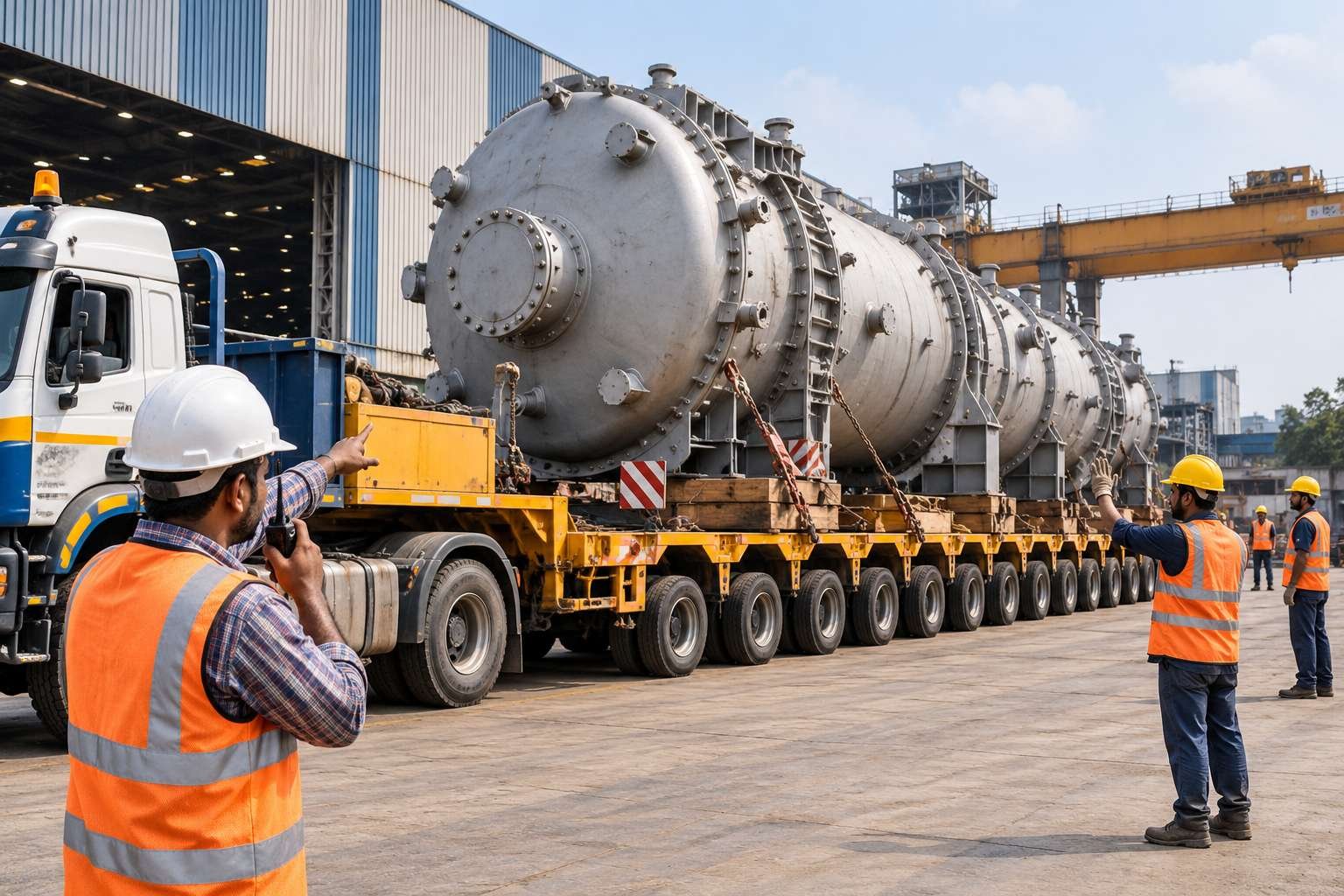
Industrial transport connects preparation, road movement and receiving. Start with the configuration that will travel, the collection and destination details and the parties responsible for loading and unloading. The road route should be reviewed for the actual vehicle and load, with current documentation requirements assigned to the responsible transporter or adviser. The receiving team needs reliable arrival information and a confirmed endpoint. A transport booking is only one part of that connected plan.
Resolve constraints before mobilisation
Look for the point where the arrangement depends on incomplete information: an unverified specification, a restricted approach, a separate specialist task or a receiving decision. Record practical alternatives with the responsible team before confirming resources. If the constraint changes, refer it back for review. Avoid turning a provisional workaround into an operating instruction without the appropriate competent assessment.
The record to prepare
Create a joint loading-to-transport release checklist as a working project record. Give it an asset or job reference, a date and a revision number. State the current configuration and the stage it relates to, then attach the evidence available. Identify the responsible decision owner and any missing input. If the requirement changes, revise the record and notify the affected parties rather than leaving the earlier version in circulation.
A practical planning example
Consider an illustrative planning situation: a machine is ready to dispatch but its receiving arrangement is still conditional. The useful question for this topic is whether the team has a joint loading-to-transport release checklist. If that record is incomplete, identify the missing evidence and the person able to resolve it before committing the dependent stage. This keeps the discussion focused on the actual requirement. The example describes a planning decision; it is not a Dayanand customer project, a capacity claim or a promised outcome.
Review before confirmation
For loading to transport coordination, review the recorded requirement with the party responsible for the actual decision. Confirm which information is verified, which remains conditional and what the next stage needs. Keep any open issue with a named owner. If technical instructions, current permissions or coverage advice are needed, obtain them from the manufacturer, qualified specialist, relevant authority or insurer before relying on the plan.
Your preparation checklist
- A joint loading-to-transport release checklist
- Asset identification and the current transported configuration
- Source and verification status of specifications or planning evidence
- Both-site access, stage endpoints and responsible contacts
- Open questions with an owner and a required decision point
- Agreed scope, exclusions and separately supplied specialist work
- Revision, distribution and stage-specific acceptance evidence
How the work is planned
Collect the topic-specific record and supporting information.
Ask the responsible competent provider or specialist to resolve open inputs.
Agree the scope boundary and the prerequisites for the dependent stage.
Confirm readiness and distribute one current revision to affected teams.
Record acceptance against the agreed stage and keep remaining tasks visible.
Questions about this topic
What should I prepare first for loading to transport coordination?
Prepare a joint loading-to-transport release checklist and identify the source of its information. Mark gaps and ask the responsible provider or specialist what must be confirmed before the next commitment.
Can photographs alone confirm the arrangement?
Photographs help explain the machine, condition and site. Verified specifications, relevant specialist instructions and the responsible assessment are still needed where the actual task requires them.
What if the requirement changes after quotation?
Record the changed configuration, access, dates or receiving scope and ask the responsible party to review it. Confirm any revised scope and readiness before the dependent stage proceeds.
Discuss the related service
Dayanand is based in Bawana, Delhi and welcomes pan-India machinery moving enquiries. Share the actual machine, locations and site information so the scope and available support can be assessed.
Explore the related moving service ↗